Choosing Safe Materials for Kids' Products
When you are buying products for children, safety is the first priority. But sorting through certifications, material claims, and marketing jargon can feel overwhelming. Here is a straightforward guide to what matters when choosing safe materials for kids' products.
Look for OEKO-TEX Certification
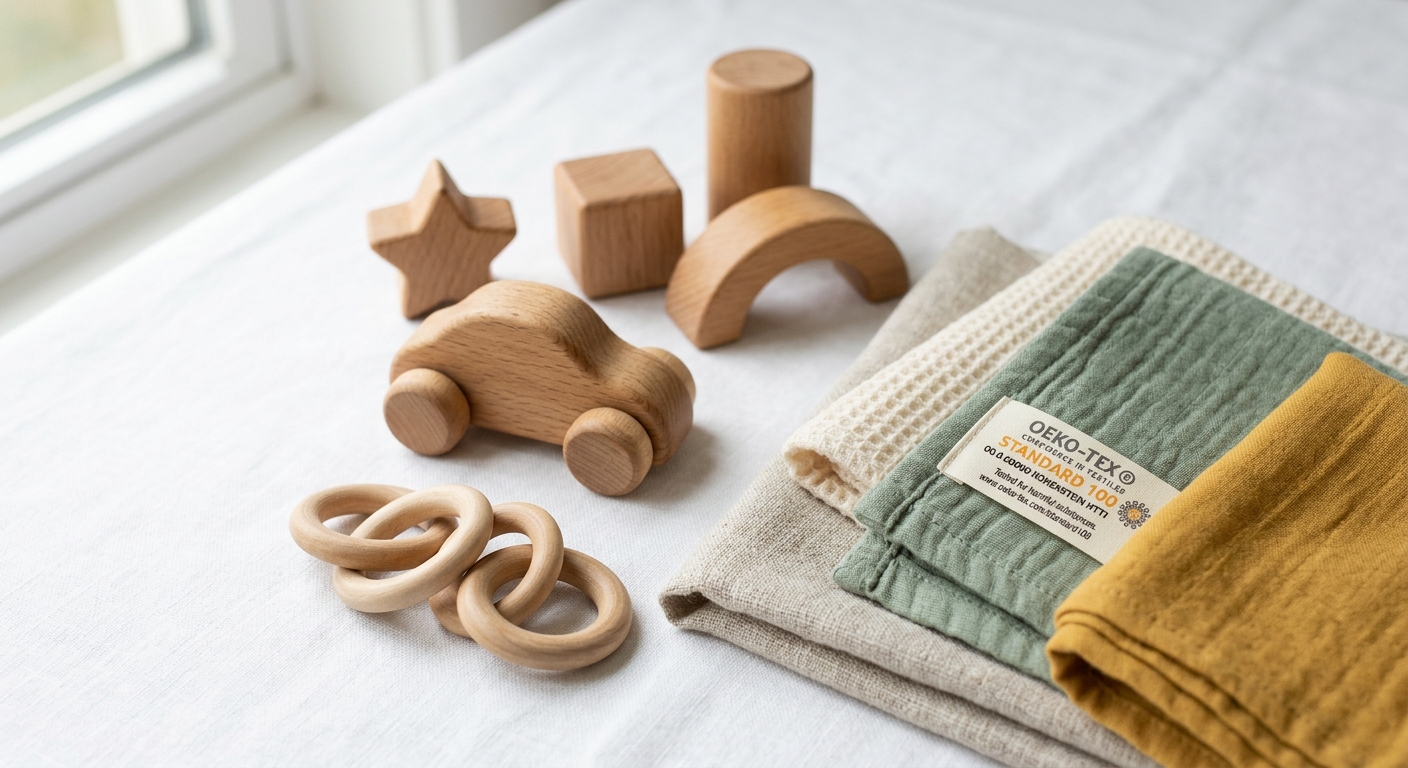
OEKO-TEX Standard 100 is one of the most trusted textile certifications in the world. It means every component of a fabric, from the thread to the dye, has been tested for harmful substances. If a fabric product carries this certification, you can be confident it is safe for children's skin.
Choose Natural Wood Finishes
For wooden toys and nursery furniture, look for natural finishes like beeswax, linseed oil, or water-based non-toxic paints. Avoid products that use polyurethane or chemical varnishes, which can off-gas volatile organic compounds into your child's room.
Food-Grade Silicone for Teething Items
If a product is likely to end up in a baby's mouth, it should be made from food-grade silicone. This material is free of BPA, phthalates, and other harmful chemicals. It is also durable, easy to clean, and does not support bacterial growth.
Avoid PVC and Phthalates
Polyvinyl chloride (PVC) and phthalates are still found in some children's products, particularly soft plastic items. Look for products that explicitly state they are PVC-free and phthalate-free.
Check Age Recommendations
Even safe materials can be dangerous if a product is not age-appropriate. A product with small parts may be perfectly safe for a 5-year-old but hazardous for a toddler. Always check the age recommendation on the product page.
At Fairy Dot Studio, every product is made with non-toxic, child-safe materials. But as a parent, knowing what to look for empowers you to make safe choices wherever you shop.