Bedtime Routines That Actually Work
Bedtime with young children is rarely easy, but a consistent routine can make it significantly more manageable. The key is not perfection but predictability. Here is what actually works, based on what parents tell us and what child development research supports.
The Power of Consistency
Children thrive on predictability. When the same things happen in the same order every night, their brains begin to recognize the sequence and start winding down automatically. The specific routine matters less than the fact that it is the same every time.
A Simple Routine That Works
- Bath or wash — warm water signals the body to relax
- Pajamas and teeth — the physical transition to sleep mode
- Story time — 10-15 minutes of quiet reading in a low-light space
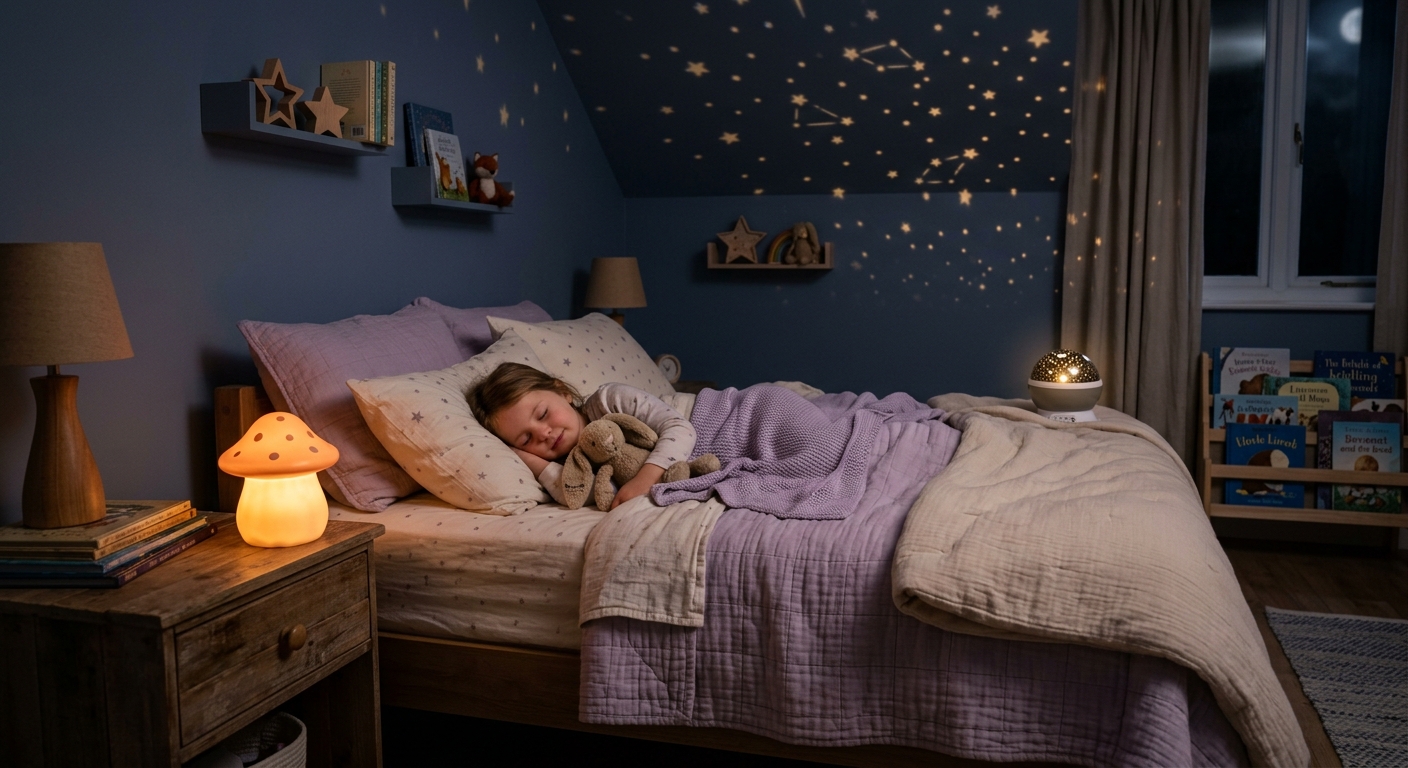
- Soft lighting — switch to a night light or star projector
- Goodnight — a consistent phrase or song that signals sleep
The Right Lighting Makes a Difference
Bright overhead lights tell the brain to stay alert. Soft, warm light tells it to wind down. A mushroom lamp with a flexible stem lets you point gentle light exactly where you need it for reading, then dim it for sleep. A star projector creates a calming visual focus that helps restless children settle.
Comfortable Bedding Matters
Scratchy sheets or flat pillows make it harder for children to settle. Organic cotton bedding that is soft, breathable, and comfortable removes a physical barrier to sleep. Let your child pick bedding with a design they love, and bedtime becomes something they look forward to rather than resist.
What to Avoid
Screens in the hour before bed are the biggest sleep disruptor for children. The blue light from tablets and phones suppresses melatonin production and keeps the brain alert. Replace screen time with reading, quiet play, or simply talking about the day.
No routine works perfectly every night. But a consistent routine, the right lighting, and comfortable bedding will make bedtime easier most of the time, and that is a win for everyone.